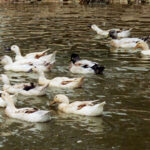
The Welsh Harlequin duck was developed in Wales in 1949 from a pair of light colored sports hatched from Khaki Campbell ducks. The breed was first imported to the United States in 1968 and admitted to the American Standard of Perfection in 2001. Physical Attributes Welsh Harlequins are slightly heavier than Khaki Campbells, but similar […]
Continue Reading
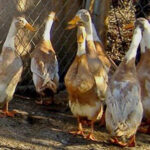
The Runner duck is an ancient breed known in the East Indies for at least 2,000 years. Its excellence lies in being a terrific layer that’s agile enough to easily herd over long distances. Runner ducks were traditionally kept in pens overnight. After the hens laid their eggs in the morning, the ducks were herded […]
Continue Reading
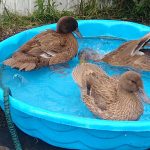
The Khaki Campbell duck came about when Adele Campbell of Gloucestershire, England, wanted a dual-purpose duck that laid well, but with a good-size body for roasting. The resulting duck breed first appeared in the late 1800s. The ducks’ buff-color plumage reminded Ms. Campbell of army uniforms, hence the name Khaki Campbell. Introduced to the United […]
Continue Reading
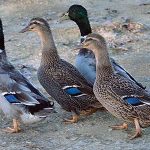
The Rouen duck originates from France, where farmers have raised the breed for hundreds of years. Rouens arrived in the United States in 1850 and were admitted to the American Standard of Perfection in 1874. Physical Attributes Rouens look like Mallards, only they are considerably larger. And they don’t fly nearly as well, making them […]
Continue Reading
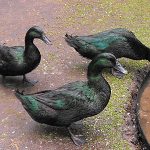
Mystery shrouds the origins of the Cayuga duck. Among the many legends, one claims the breed came from a pair of wild ducks in New York. Another claims the Cayuga derives from the ancient Black duck of Lancashire in the United Kingdom. Whatever the case, the duck gets its name from a Native American tribe […]
Continue Reading
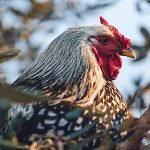
Chickens, including bantams, tend to do better in cold weather than in hot weather. However, some bantams tolerate the cold better than others. Certain features — such as dense plumage, leg feathering, beards, and small combs — contribute to a cold hardiness. Often the country of origin provides a clue to a breed’s climate tolerance. […]
Continue Reading
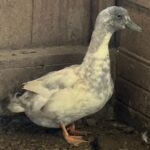
- Splash Swedish Duck – Sold as Baby Ducklings Only
Shipped Mid Feb thru June.
Minimum of 3 to ship.
Continue Reading
Homegrown eggs are so tasty they are unlikely to sit around long enough to spoil. However, eggs do occasionally go off. Every chicken keeper should know how to tell a good egg from a bad egg. Why an Egg Goes Bad A bad egg is generally one that has been contaminated, rendering it inedible or […]
Continue Reading
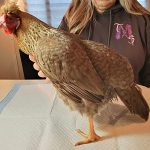
Water belly is a condition in which a chicken’s body cavity fills with fluid, causing the abdomen to bulge. It is not itself a disease, but rather a sign of heart failure. Let’s take a look at the various causes of water belly in laying hens. Heart Failure in Laying Hens As with people, aging […]
Continue Reading

You probably know you can get your kicks on Route 66, but did you know you also can get your chicks on Route 66? Cackle Hatchery® opened for business in downtown Lebanon, Missouri, in 1936, just ten years after the opening of historic Route 66. Four blocks off Route 66, the hatchery today is one […]
Continue Reading